• Invoking Pocahontas: An act of racism disguised as politics


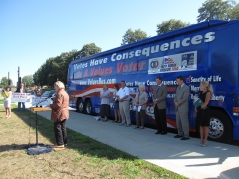
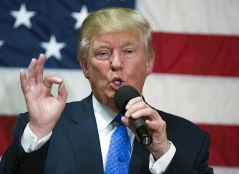
    At a recent event honoring Navajo Code Talkers who are World War II Veterans, President Donald Trump stated, "You were here long before any of us were here. Although we have a representative in Congress who they say was here a long time ago. They call her Pocahontas"[1]. This was not a first offense, as Trump has a history of referring to Senator Elizabeth Warren as Pocahontas. Trump’s “name calling” stems from Warren’s (albeit controversial) identification as Cherokee[2]. Fact, fiction, or it’s complicated, the accuracy of her ancestry is peripheral; calling Warren Pocahontas is racist and

    ...more
  • Are conservatives really simple-minded?

    The current consensus in psychology is that political conservatives are uniquely simple-minded. Indeed, even the famous critic of political bias and Heterodox contributor Jonathan Haidt (and colleagues) suggested that there is a “consistent difference between liberals and conservatives” on several measurements related to cognitive complexity (Joseph, Graham, & Haidt, 2009, p. 176). ...more
  • Does it matter if people are aware of their implicit racial bias?

    In this blog post, I discuss how people respond to information about their implicit racial bias—automatic attitudes and beliefs that favor one ethnic group over another. Although people can be defensive, emerging research suggests there are benefits to accepting implicit racial bias and being aware of this subtle prejudice. ...more
  • Never give up: The persistence of misinformation effects

    Politicians, corporations, journalists and even scientists sometimes do it – they tell people things that later on turn out to be incorrect. Yet, getting rid of this so-called misinformation is often easier said than done as false beliefs are particularly sticky. In this blog, I zoom in on the current state of the art in misinformation research. ...more
  • Political ideology is more than just “liberal” and “conservative”

    In this blog post, I describe new evidence that thinking about political ideology on a single liberal/left to conservative/right spectrum masks important nuances in the origins of political ideologies and in the way that people apply those ideologies to important judgments, including those of other people (i.e., prejudice).

    ...more
  • Being rational and emotional are not (necessarily) contradictions

    In the first part of this three part series, my colleague Ellie Shockley described how rational thinking may drive political attitudes and voting behavior. In the second part of the series, Matt Moytl described how emotion may drive political attitudes and voting behavior. In the final part of this series, I discuss how emotions and reasons are not necessarily in conflict. ...more
  • Political convictions emerge from the gut

    In the first part of this three part series, my colleague Ellie Shockley described how rational thinking may drive political attitudes and voting behavior. In this second part of the series, I describe how emotion may drive political attitudes and voting behavior. In the final part of this series, Mark Brandt will discuss how emotion and reason each contribute to people’s political attitudes and behaviors. ...more
  • Are voters rational?

    Are voters rational? As a part of a three-part series on the subject of voter rationality, my colleagues Matt Motyl, Mark Brandt, and I will discuss some theories and research dealing with voters’ attitudes and behaviors. We hope you will stay a part of the conversation with us!

    ...more
  • Everyone is prejudiced, too

    In this blog post, I will discuss new research in political psychology that is changing our understanding of what prejudice is, and who is prejudiced. ...more